
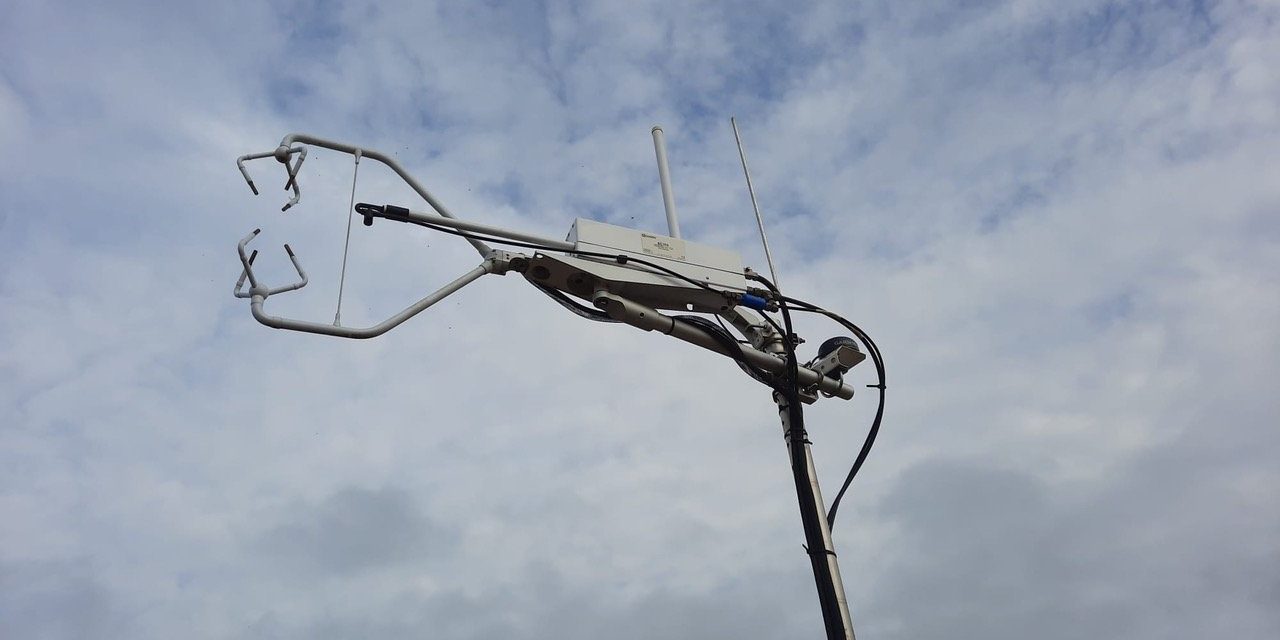
The TMAF flux tower project at Morley is providing a clearer picture of how sugar beet, cover crops and subsequent cereals affect carbon emissions across the rotation, reports Dr Georgina Barratt from BBRO.

It’s been over a year since my March 2025 update on the flux towers, largely because we were waiting to complete data collection and analysis from the crop sequences in the paired fields. The towers were moved post-harvest in August 2024, ahead of sugar beet drilling the following spring. We now have data from both the sugar beet crop and the following spring barley, which was harvested in the past week.
What has been the impact of cover crops on carbon dynamics?
A key area of interest in the project has been the impact of cover crops on carbon dynamics. In the first paired fields, equipment delivery delays meant that the cover crop and stubble comparison was not possible, but this time the fields were measured during this period. During the cover crop period, both fields were net sources of CO2, but the cover crop reduced emissions by just over 1.08 t CO2 ha-1. As with all emissions research, other factors also need to be considered, such as the cover crop’s ability to hold nutrients, protect the soil from erosion and help improve soil structure compared with leaving stubble or bare ground overwinter.
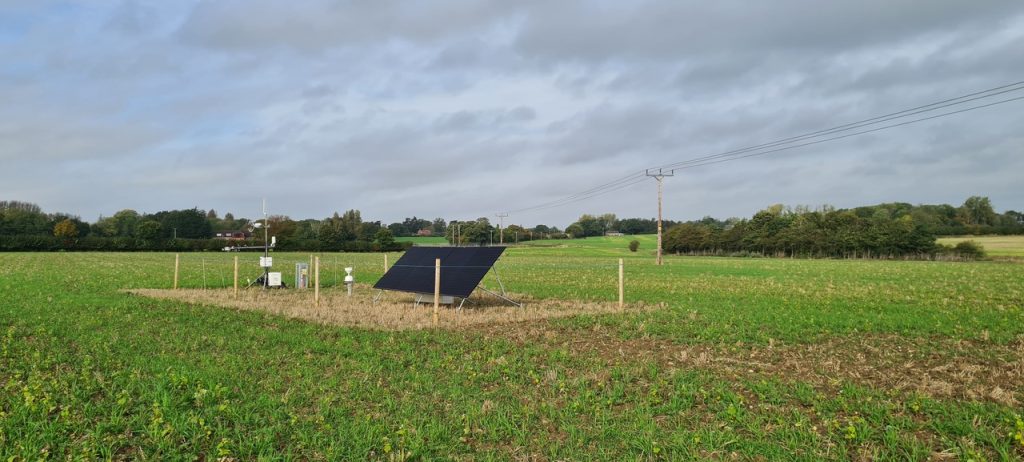
Data has now been collected from two years of sugar beet crops, enabling a comparison between them. Even with the 2024 crop compromised by ryegrass pressure, as discussed in my previous update on the flux towers, the rapid growth of sugar beet is evident from the large amount of carbon fixed through photosynthesis. Compared with the 2024 barley crop, the sugar beet fixed an average of 6 t CO2 ha-1 more, driven in part by its longer growing period. The main difference is the amount of crop offtake: at harvest, an estimated 7-9 t C ha-1 is removed in the sugar beet crop, compared with around 1-2 t C ha-1 in barley. This means that sugar beet is a net source of CO2, while barley is a small net sink. However, straw offtake has not been accounted for and will probably have a significant impact on these figures. This year the straw has been accounted for, which will give a better data set for calculating total offtake in the barley crop.
What effect does crop management have on carbon absorption and emissions?
Unlike in 2023, there were no issues with the sugar beet crops in either field, despite one being managed under what we would consider better practice, and both crops performed similarly with comparable emissions. Again, this highlights the need to avoid looking at emissions in isolation and to consider the wider benefits of management practices, as shown by the cover crop. This is also where a carbon calculator is needed to assess how different crop management approaches affect total emissions from each field.
How much interest is there in reducing GHG emissions from crops?
The project has attracted attention in the UK, due to its appearance on Countryfile in March 2026, and internationally through the IIRB, an organisation of sugar beet research institutions from around the world. I have presented findings from the project so far at both an IIRB winter seminar in 2025 and this year’s IIRB congress, which was held in the UK for the first time in 30 years.
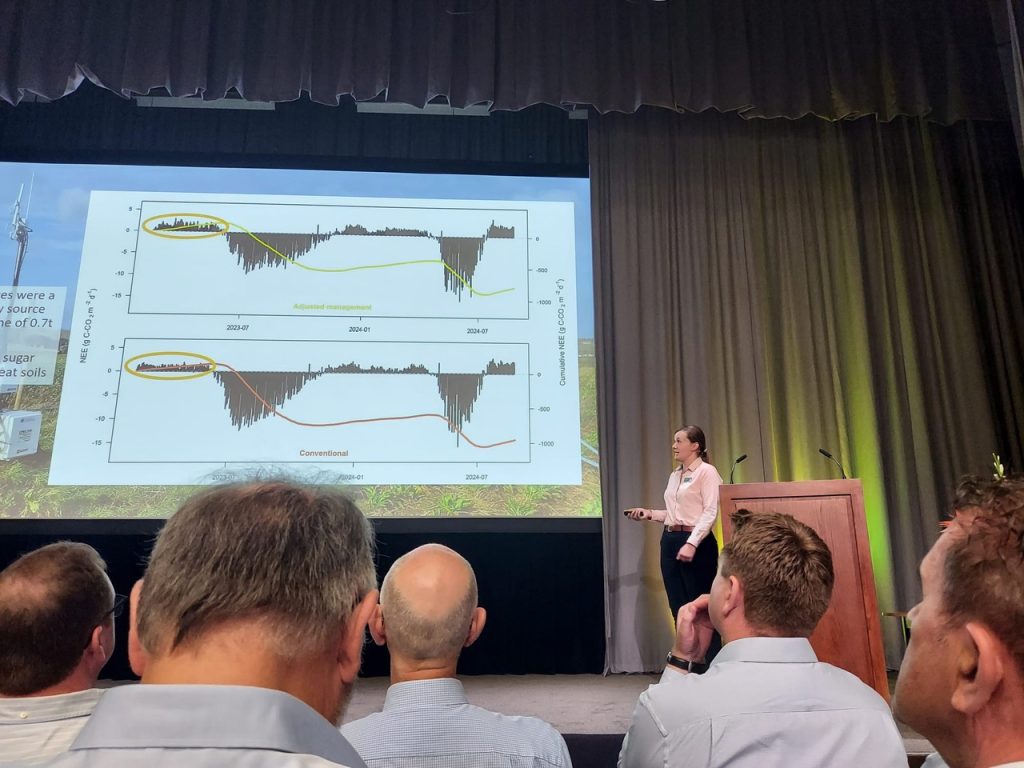
European sugar beet producers are all under pressure to reduce GHG emissions and optimise sugar beet production, so it was useful to talk to others about their research in this area.
The general consensus is that focus should be on fuel and fertiliser emissions, as they are by far the biggest contributors to on-farm emissions and there are many options to reduce them. BBRO is currently looking at reducing fertiliser rates using placement at drilling, using alternative fertiliser products and exploring changes to tillage intensity to save fuel.
What will happen to the flux towers next?
The next step in the project is moving the flux towers this August ahead of the 2027 sugar beet crop. The towers will be moving back to the fields they were in in 2023 which will provide a robust data set as we already have a baseline of the emissions from these fields.
Overall, the flux tower project is generating both data and discussion that will help the beet sector reduce emissions and ensure that UK sugar beet production remains competitive and profitable on farm.