
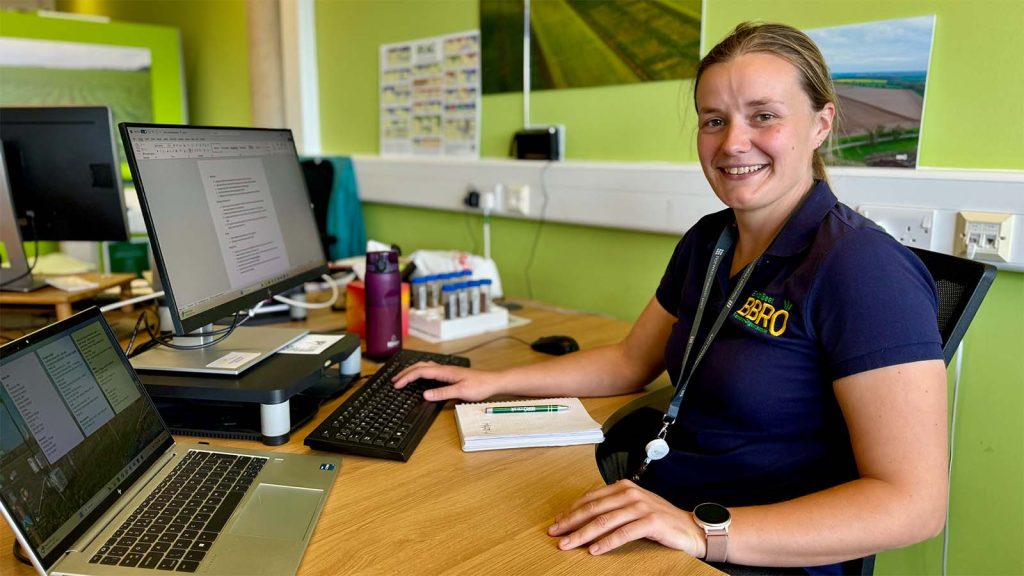
The next in our series on the outcome of TMAF support for younger scientists focusses on the work and ambition of Dr Georgina Barratt. As Head of Crop Production with BBRO her goals are clear, for farming and for her own professional development.
I describe myself as an accidental agricultural researcher. What I mean is I never set out with this role as my career ambition.
At school I wanted to go into the Air Force and become a pilot. My eyesight was not good enough for that so I decided the next best thing would be an engineer working on planes.
When I got to Nottingham University to study engineering, I soon realised I hated it! I loved the student life, and all the sport I could get involved with, so had to look for what else I could study. My Dad was OK with my decision to try to switch courses, very supportive, which was so helpful at the time. The question was what to do? I was interested in economics, and I looked at that. But it was when I talked with Nottingham students of agricultural economics, they were so willing to talk about farming and explain it, that my mindset shifted.
The pull of agriculture
When out driving I discovered agriculture is everywhere! When I sat down to eat, I started to wonder who grew the grain for this bread, who kept the cows for this milk, and who grew the potatoes for these chips and how?
In some ways, the switch to study agriculture was not an easy time for me at all. I took a bit of time out and worked at a branch of Wickes in Grantham for a few months (that was good experience of another kind) and then, quite soon, I was totally sure I wanted agriculture to be my course – and career.
TMAF influence: from undergrad to PhD
One of my agriculture lecturers was the brilliant Professor Debbie Sparkes. In my last year, when I heard that she was offering a fully funded PhD researching the effect of drought on sugar beet, I plucked up the courage to ask her if she would take me. Getting accepted meant I could continue the student life I loved in Nottingham, including hockey and competitive clay shooting.
Thanks to Debbie Sparkes, as an undergrad and then during my PhD, I came across TMAF. When I finished my PhD, I approached BBRO for a job. I had gained that confidence that if you know what you want, then try and get it. If you don’t try, then definitely nothing is going to happen!
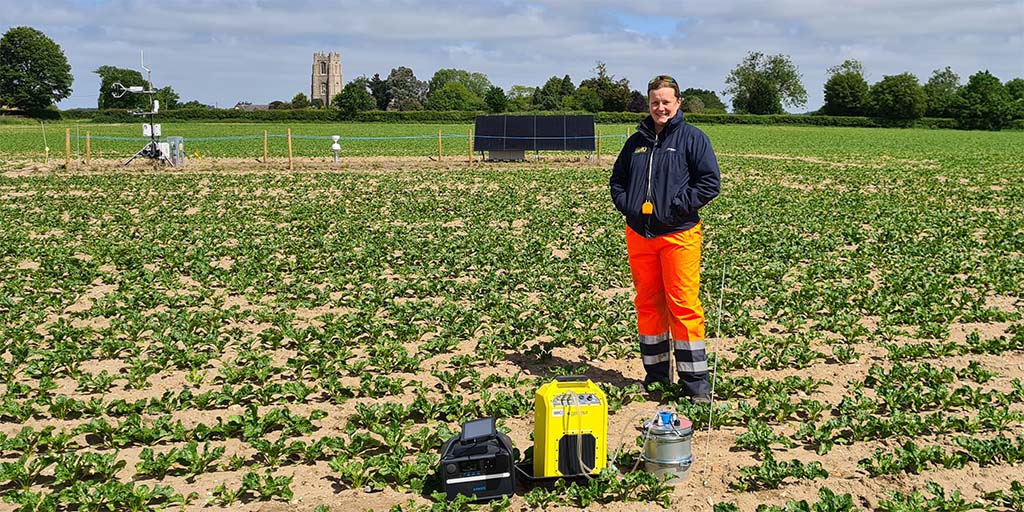
The research I wanted to do then was looking at the sustainability of growing sugar beet, of course that includes the economic viability but also the environmental impact of the crop. On a chance visit to the University of Lincoln I saw carbon flux towers but at a cost of £150k per tower. I could see, with the fantastic set up with TMAF of the Morley Farms, that if we could have two we could use them to compare the carbon absorption or emissions of beet under different management systems.
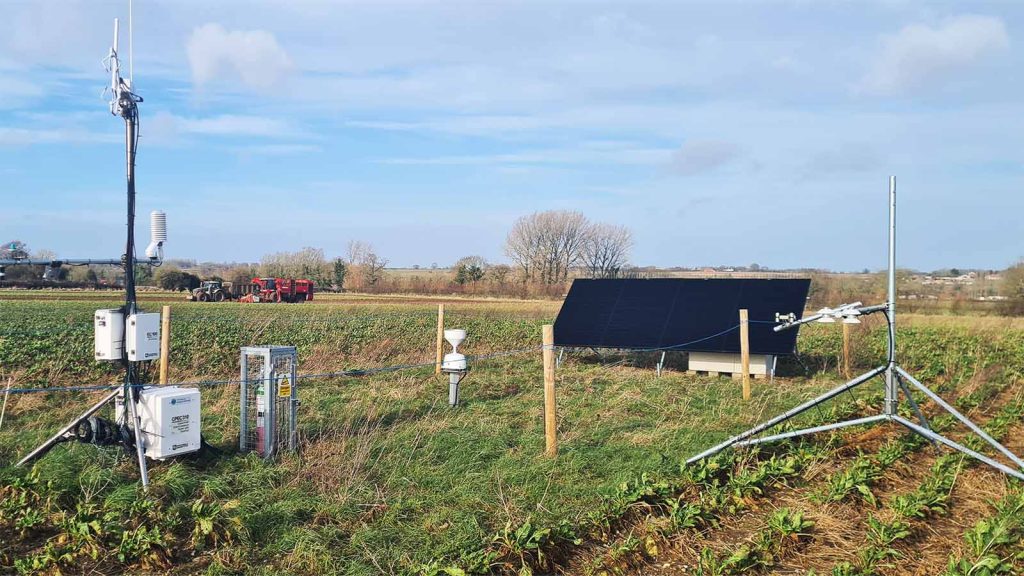
TMAF is an amazing help in that you can go to them with an idea, a proposal – even for a very significant sum of money – and, as with the flux towers, they help with the money and practical help. For example, David Jones Morley Farms Manager has been amazing. TMAF invested over £200,000 in the two towers, allowing me to get on with the work.
TMAF also helps fund the John Forrest Award (JFA) Communication Skills course that I went on 2018. I really enjoy presenting my research and technical advice using the skills gained from the course. It also gave me confidence in addressing questions and debate which leads to some great discussions with others in the industry. I get asked to share my experiences with the next JFA cohorts to show how I put the skills I’ve learned, thanks to TMAF, into practice in all sorts of situations.
Setting my goals in work & life
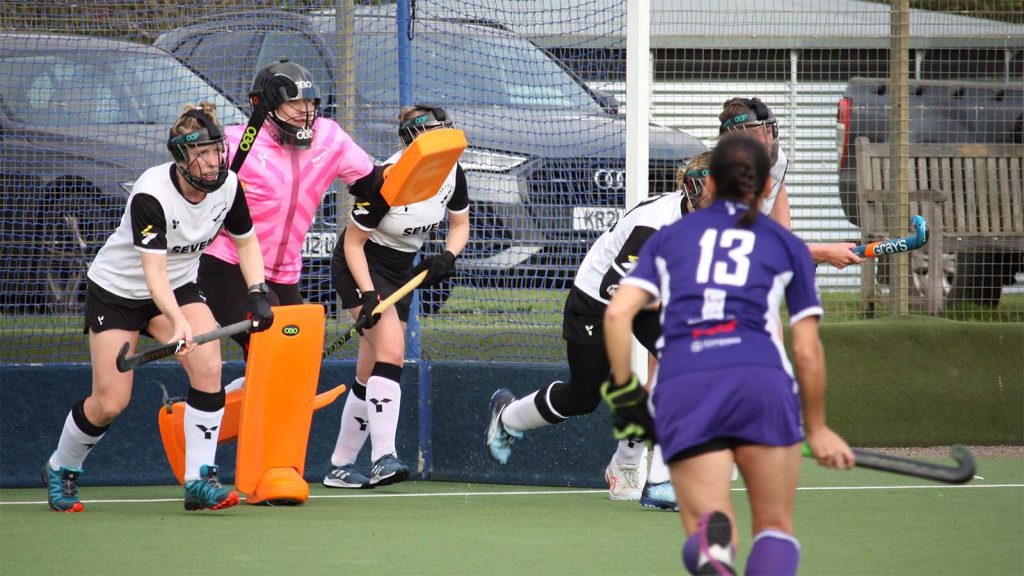
I have recently been promoted to BBRO Head of Crop Production. I have more responsibility, I’m helping to shape the research and other work of BBRO. In sport, to play at a higher level I have moved from Norwich City to Harleston Magpies Hockey Club where I am goalkeeper in the Womens 1st team.
I still love science, of course, but I also really love the people management side of this role in a research organisation. I love going to technical events, working on the trial sites like at Morley Farms and going to meetings, having conversations, being in a team and leading others. It gives me huge satisfaction to do what I can to build the skills and confidence of those who work with me. It’s great to see them grow.
My aim to is to help farming to be sustainable – financially of course, but also in every other dimension of what it means for a crop such as sugar beet to be sustainable. With TMAF financial support I’ve studied the impact of drought on beet, I’m analysing what’s happening with carbon during cultivation, and we’re continually looking at how, for example with cover crops, we can improve soil health and resilience before a beet crop and after it’s harvested.
Next aspect to study? It’s the effect of sugar beet and its management on water quality. In five- or ten-years’ time, I hope you will find I’ve helped to find answers and practical solutions.