
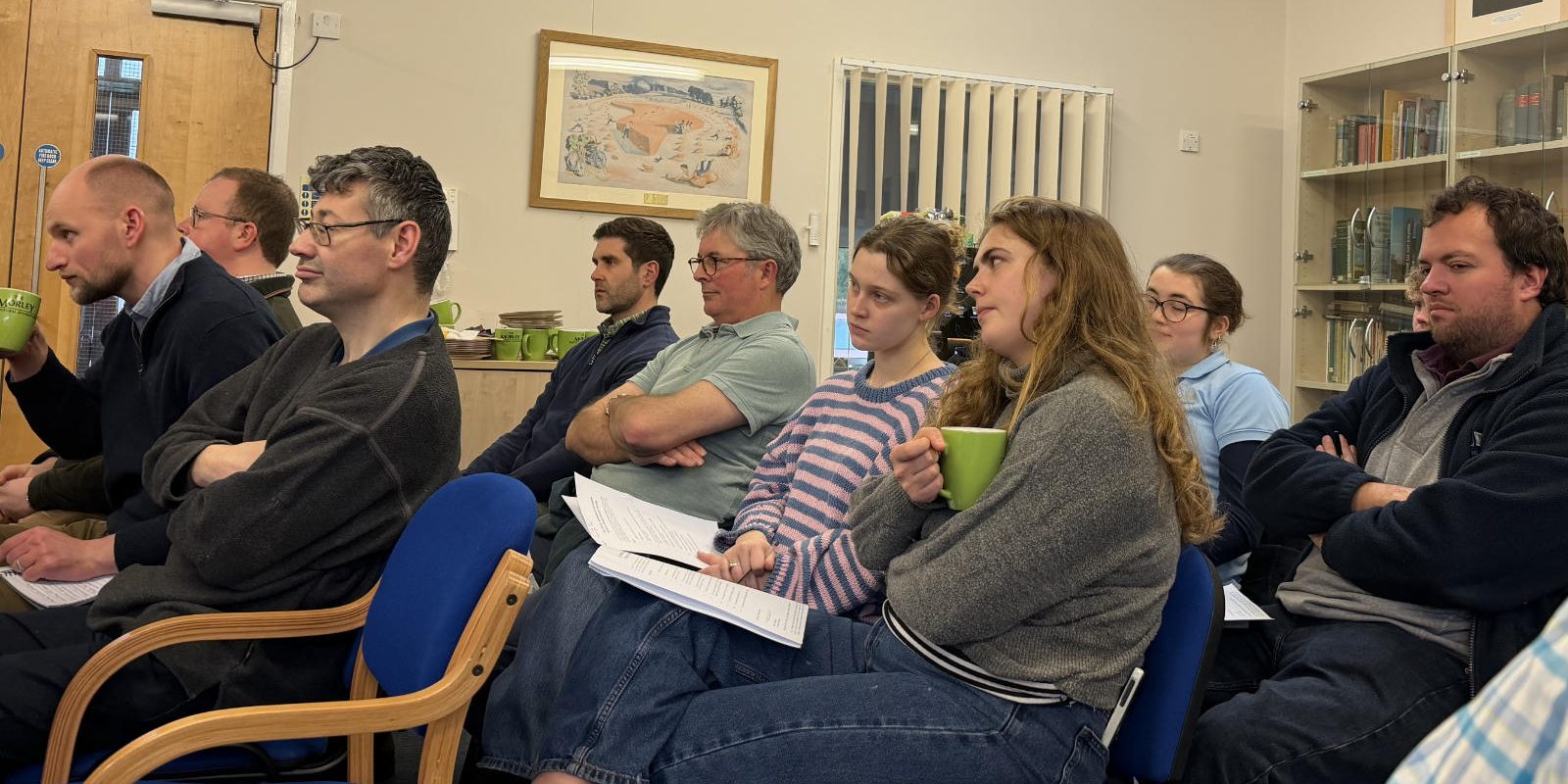
To answer the question of why, when and how farmers adopt science in what they do with their crops and livestock the excellent TMAF Winter Talks 2026 were given by two respected farmers. The younger, Oli Fletcher, took the long view through two centuries of farming. Then well-known North Norfolk farmer Tony Bambridge gave his contemporary perspective.
TMAF investing in knowledge and people
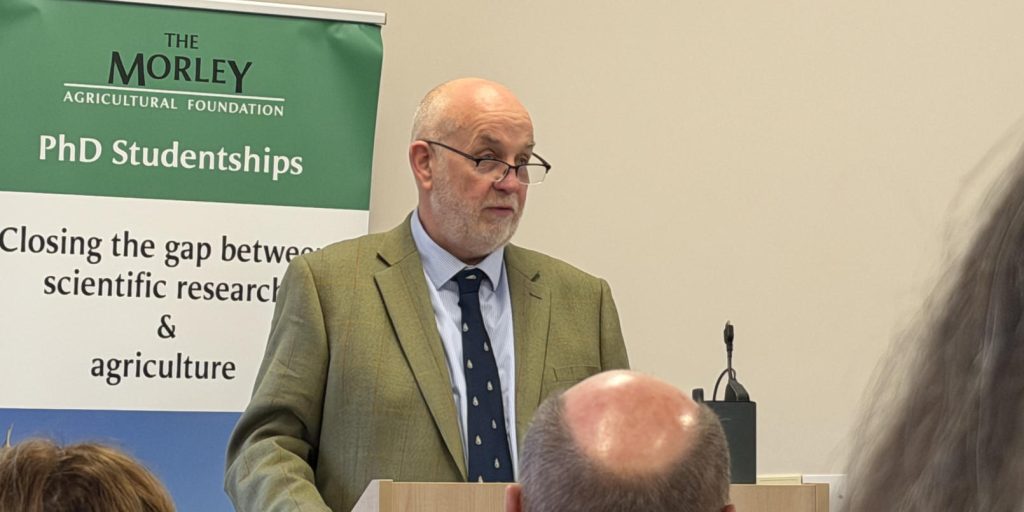
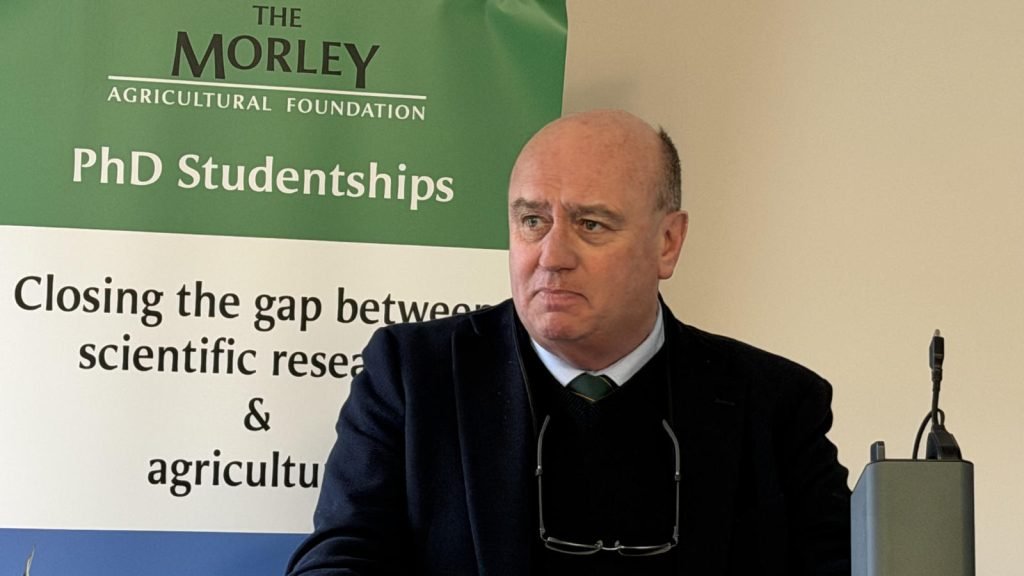
First up, TMAF Chair Richard Wilbourn summarised the robust health of the foundation. He invited the capacity audience gathered at Morley Farms headquarters to bear TMAF in mind for, as always, research but also for professional progression, thanks to the £50k investment made through the RNAA in leadership development.
What can we learn from the history of adoption of science in farming?
To examine what there is to learn from the history of adopting science in agriculture, the audience at the TMAF Winter Talks was introduced to young farmer, historian and influencer Oli Fletcher. Oli has built a reputation for presenting the facts and trends in farming history, particularly on his YouTube channel Farming Explained.
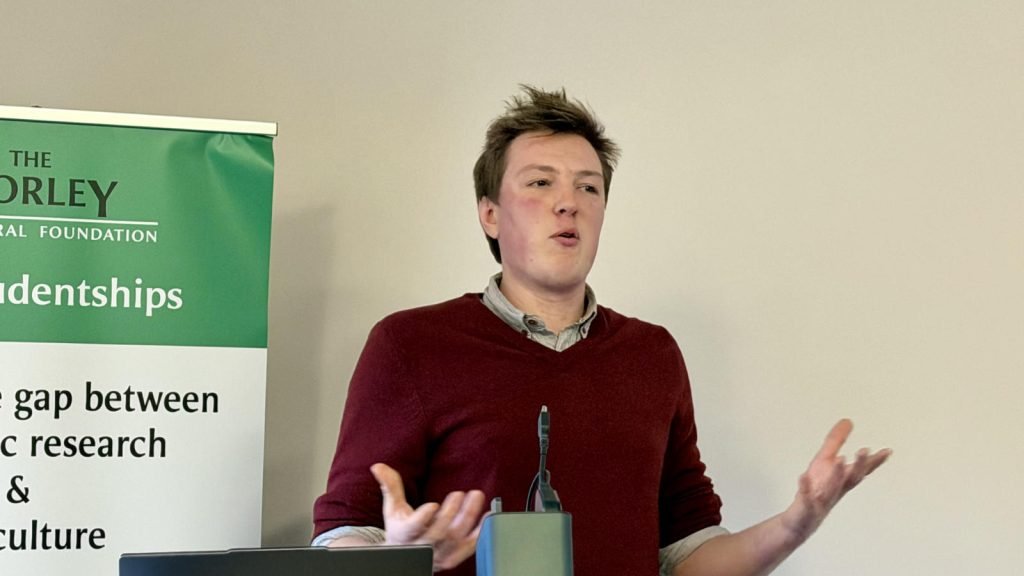
The thread of his presentation began right back when enclosures transformed the landscapes and when farmers became “aristocrats and peasants rolled in to one”. Giants in the farmscape such as Thomas Coke, Jethro Tull, Sir Daniel Hall, Rex Paterson, George Baylis, Frederick Chamberlain and George Stapleden amongst others were referenced for the ideas they had – or took from others – and to what extent they were able to implement or advocate them. There was also analysis of how government ambition and policy has – or has not – made a positive difference.
“Farmers act if they know something works and when demonstration overcomes their natural conservatism”, observed Oli, citing the widespread adoption of tractors in just a couple of years. “Science may need charismatic leaders to break down social and other barriers.”
After colourfully illustrated examples of farming facts and fashion over time, Oli summarised the lessons from history as:
- Science is sometimes wrong as our understanding develops
- Scientific farming is intended to feed the people (not benefit the few)
- On farm, science has been the salvation of the few, not the many unless policy is put in place to allow its use
- Results must be demonstrable and practicable
“Time after time, if farmers see something new work and know it is no or low risk then they will invest their time and money it making change happen.”
Oli Fletcher
Making use of agricultural research – a Norfolk farmer’s view
Tony Bambridge gave his very measured, honest and clear perspective on the science – and philosophy – that has contributed to his business success as B and C Farming, particularly in growing seed potatoes.
“From the very start, I knew I had to perform with technical excellence to survive. I saw agronomy advice as an investment not a cost. As a Norfolk seed potato grower, without the benefit of neighbours to learn from (as I would have if I was a grower in Scotland) I had to lean into scientists at Rothamsted and Cambridge University Farm (CUF) and plots at Morley Farms to help solve my problems.”
Tony Bambridge
In chasing optimal canopy development for maximum interception of sunlight, Tony referenced the sources of science-based advice on:
- drilling date, seed rate and germination rate to get density of planting
- reduction/avoidance of compaction (CUF and also Niab)
- optimised nutrition and irrigation by ‘racing’ (benchmarking) his crop development with that computer modelled (CUF)
While potato yield potential is 80-100 tonnes/ha the national average is not much more than half that at 48 tonnes/ha, while leading growers hit about 85% of their yield potential. “Why is that?”, asked Tony Bambridge before listing his answers and solutions “We have to use technology to put a farmer’s virtual boots on the fields and gather useful information; we need practical or applied science and technology solutions and TMAF has an important role in that; and we need to train up younger operators and managers to use all these new tools.”
TMAF refreshes and refocuses attention for farming challenges of 2026
The TMAF 2026 Winter Talk Attendees all left feeling refreshed by the historical and contemporary take on the ways that farming has responded to the challenges of the day and continues to look to ways to measure how to make a difference to yields and costs of production.
TMAF Chair Richard Wilbourn had the final word and summed up what farmers and the researchers and others who can advise them should be focussed on.
“The biggest metric of all is money and making things work on the farm for profitability. If work we do at TMAF contributes to that we’re on the right track.”
Richard Wilbourn