
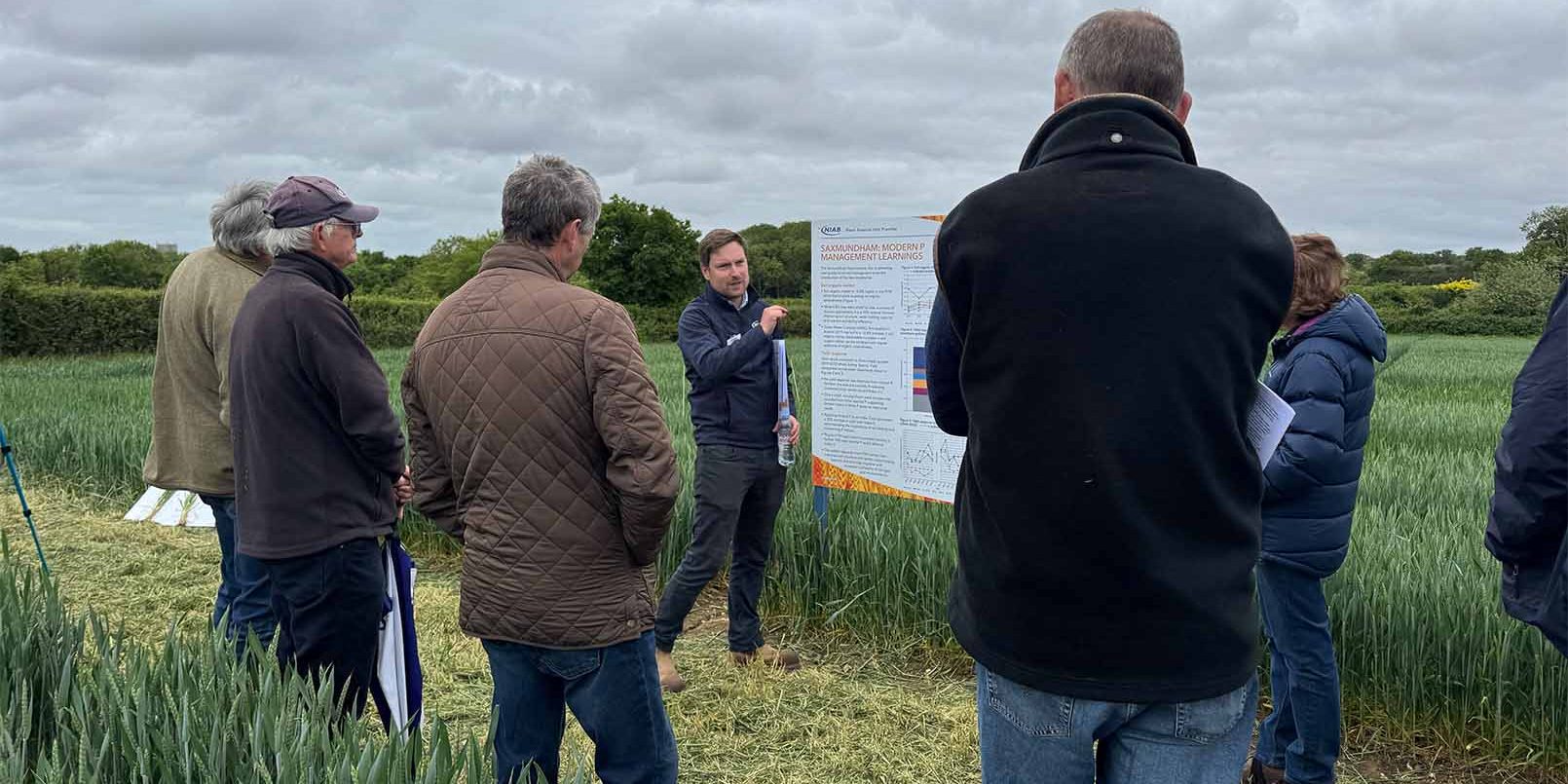
On an ordinary May day, a group gathered in an extraordinary East Anglian field. Everyone – whether a farmer, farm manager, agronomist or researcher – was curious and gently respectful of the Suffolk location for long term trials for the last 125 years. Also, the current and future relevance of what the plots teach us and whether they can shape farming practice.
New energy for the potential to learn by long term research
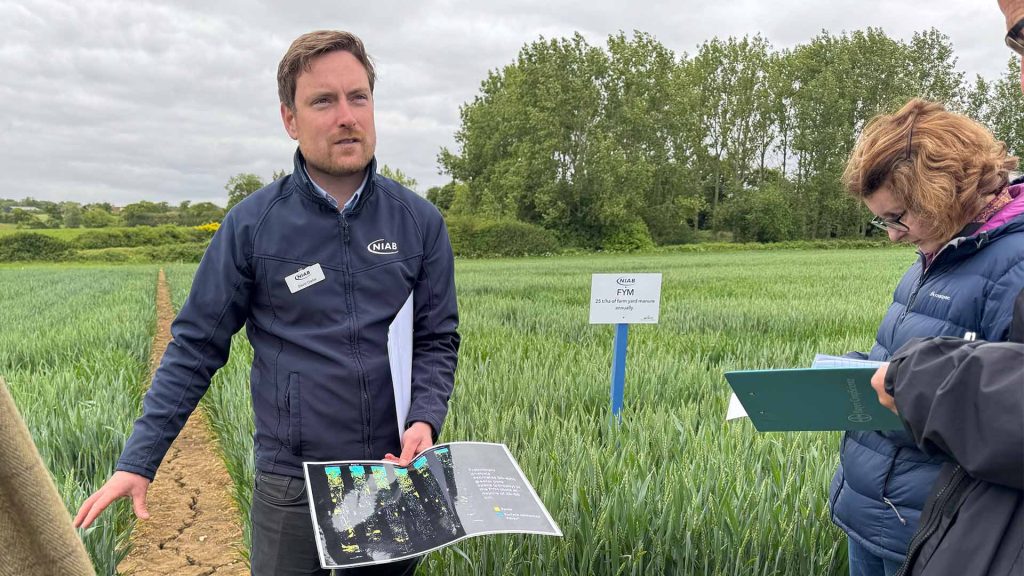
Obviously enthusiastic about his role in current research at the Saxmundham site, NIAB Soils and Farming Systems Technician David Clarke neatly summed up its contribution.
“Every forty years this long-term experiment has asked a different question. First it was does this nutrient management we use work? Next, how does it work? And then what else works?”
David Clarke
In addition, he adds, asking new questions about how cereals can be grown with less inputs and for as much if not more yield and with lower carbon footprint means that this site is being divided into 1000’s of treatment plots and giving much better granular detail of the whole site.
Invigorated by research to find modern farming solutions
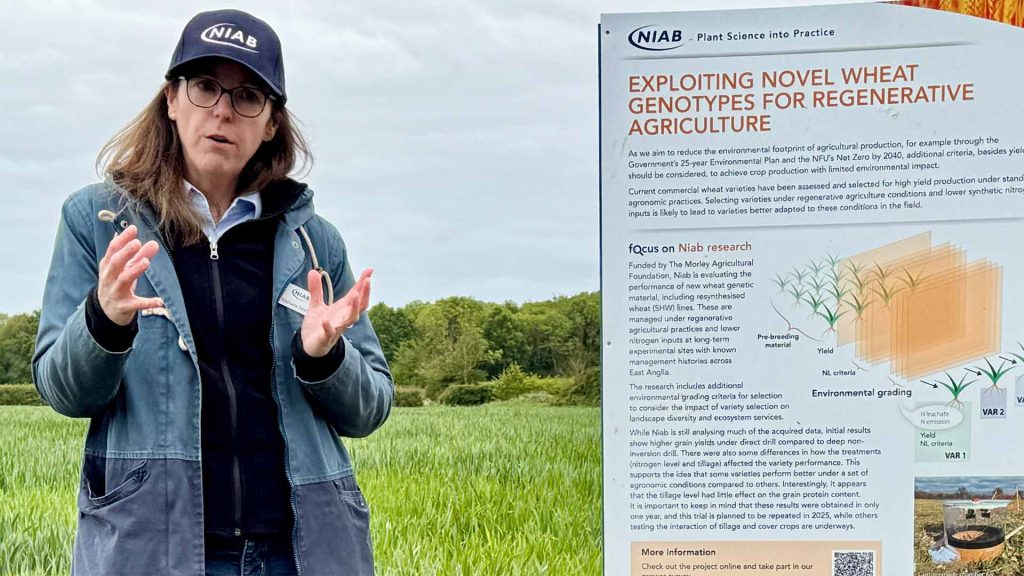
Walking between the cereal plots, there were different speaker stops. NIAB’s Dr Stéphanie Swarbreck explained how “this is the best site for our research because of the Saxmundham field’s particularly low phosphate level.” Her work focusses on how wheat plants respond to different levels of nutrients, including nitrogen, to help develop varietal lines that use it more efficiently while producing high quality grain and with lower environmental impact (greenhouse gas emissions).
Ground-truthing ideas and trends
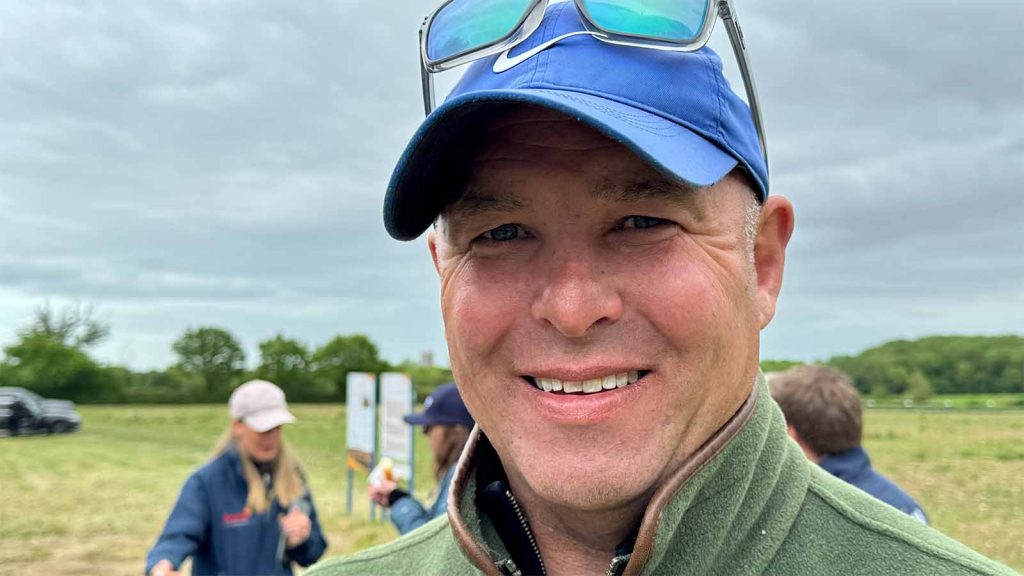
Farmer Russell Mackenzie, who manages almost 1000 hectares of arable land on the Cambridgeshire/Bedfordshire border, was one of the visitors. He has long held a strong interest in trials and takes part in several in his own farming. So why join the ceremony at Saxmundham this May?
“You’ve got to be interested in something that’s been going for 125 years in farming. Especially when you think about all that has changed in agriculture over that time. But we’ve still got so much to learn. I’m interested in the use of foliar P and different options with that. When so many trials are just not very long, with a long-term experiment like this we have something really valuable.”
Russell Mackenzie
Technology to fast-track measurement and monitoring
Research at the Saxmundham site started with relying on painstakingly meticulous paper records of thousands of observations in a season. Now, drones take to the air above the plots to assess effects of different applications of fertilisers in minutes. Soil samples go to laboratories for detailed microbiology analysis, or scanning to create digital ‘maps’ of the ‘soilscape’ below ground.
There was a lot of interest in the x-rays of soil core samples, just back from the University of Nottingham, showing up to 40% more space for penetration by roots and earthworms in the plots that have received continuous applications of farmyard manure or equivalent compost. After all that time, organic matter level has lifted by 1% but seems to have delivered big changes in the crop.
An enduring legacy
Research at the site continues, thanks to TMAF investment. However, the end has come for one of the researchers much-respected for his dedication to long term experiments. His name was A.E. (Johnny) Johnston. He died aged 96 in the same month as the Saxmundham site reached 125 years.
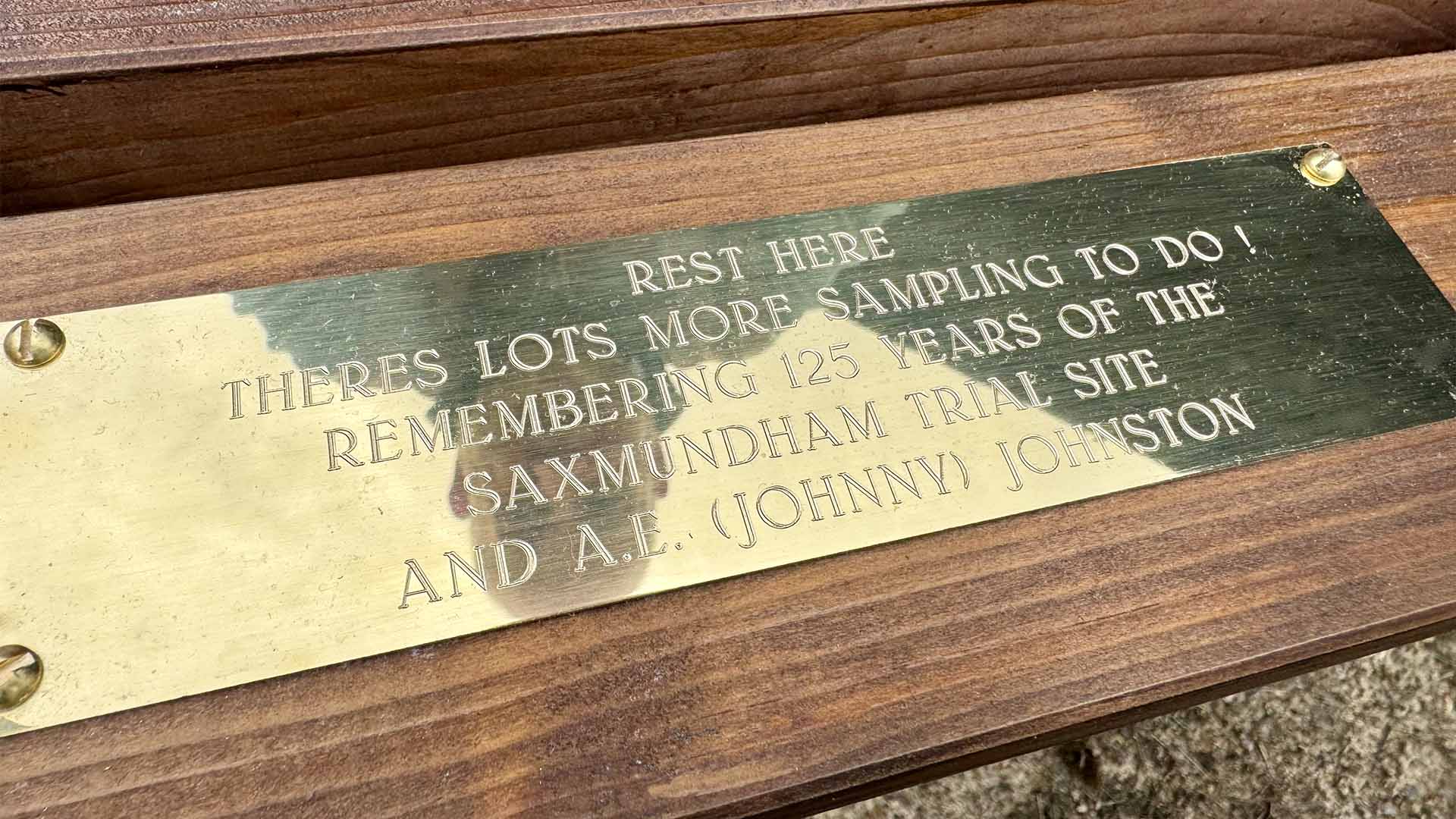
In tribute, NIAB’s Dr Elizabeth Stockdale mentioned Johnny Johnston’s unbeatable work ethic in soil science when the Suffolk site was managed by Rothamsted Research. She revealed a plaque on a bench table where modern researchers might pause from their work and reflect.
“I’m proud that the contribution of TMAF in supporting long-term experimentation has been so often mentioned today and obviously appreciated. This research – which TMAF stepped in to support when others withdrew – is a really good demonstration of what TMAF does. I’m proud of it.”
Richard Wilbourn, TMAF Chair of Trustees