

The Tudor house on the hill
I pulled in through the imposing steel gates from a tight, impossibly small roundabout and onto the tree lined avenue. Ahead were the manicured gardens, towers and crenelations of Madingley hall. This 16th century house, used for centuries by scholars of all description was to be our home for the next three intensive, exhausting, exhilarating days.
Breaking the ice
After walking in through the oak panelled dining hall we were shepherded into the smaller board room, decorated with gorgeous oil paints of old alumni and notables. Susie, the course director, jumped up to greet us, all energy, flyaway hair, and silver bangles. She asked us to start simply by introducing ourselves. An easy start we thought. How wrong we were. She grilled us ruthlessly after we all rather timidly introduced ourselves. Every pause, hesitation and intonation critiqued, body language was highlighted, rhythm and language interrogated. Why are we using that inflection? Are we keeping the audience’s attention?
Susie’s point was clear though. Yes, we were embarrassed introducing ourselves, a nightmare scenario for any introvert, but this is what everything was going to be built on over the next three days. Being engaging, clear and concise, excited, energetic and memorable was the starting point to being a better communicator.
The pictures are better on radio
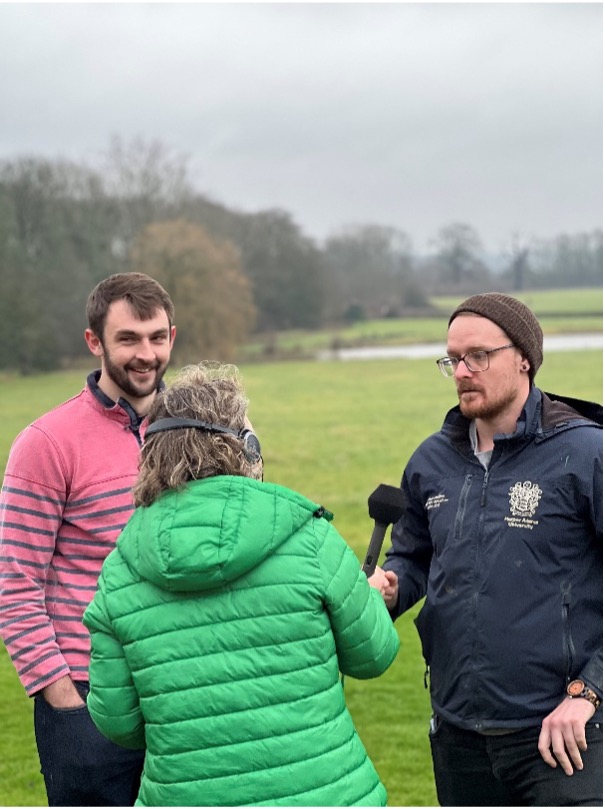
We continued talking, delivered presentations, evaluated our writing styles, discussed interviews and how to pitch your message to get it picked up. But for my money, the radio interview training was the most engaging. Audio is the medium known and loved by generations of farmers and growers in tractor cabs, echoing in workshops and above the hum of the milking parlour. Radio is in the background of our lives but speaks to you directly, that’s its great power, to talk as if your face to face, within earshot. With radio you have the chance to land the soundbite that will stay in the audiences head all day. Podcasts offer something else, the opportunity to capture longer form content, those great conversations you can have at the farm table, the pub or on a field walk, straight into people’s ears, breaking down the barrier between interviewer and interviewee.
Thoughts for the future
I’ve come away from the John Forrest Award Communication Course drained, but highly motivated. Which, on reflection, is precisely where I want to be, eager to try new approaches to communications. I want to use the skills I’ve gained to make an impact with my career, after all, farming is the biggest job on earth. If we can’t talk about it, who else will?