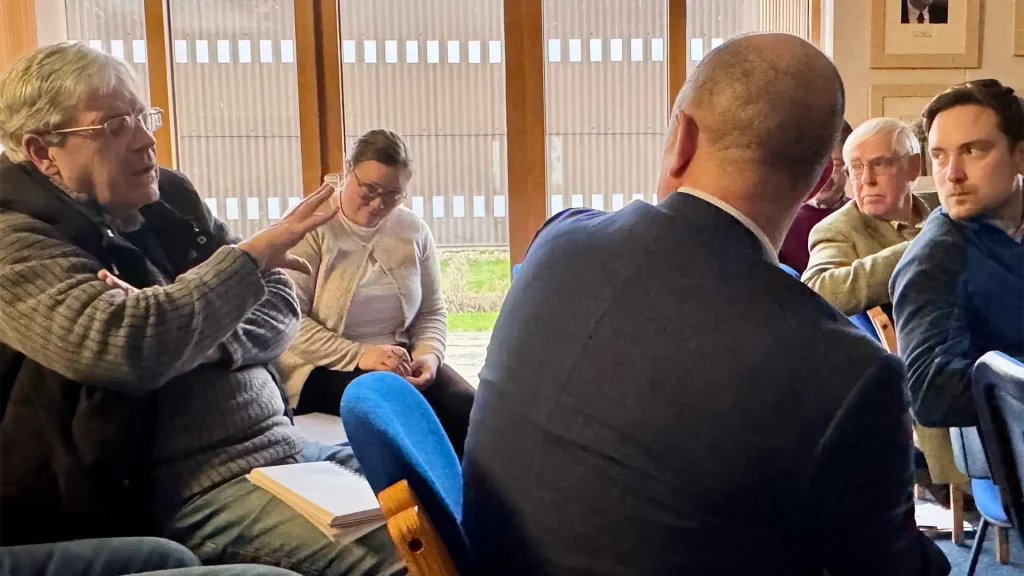
We combined our 2025 AGM with our Winter Talks sharing updates from our long-term trials we continue to invest in. Plus, we got a fascinating progress report of recent trial work by another East Anglian research consortium.
The opening news from TMAF Chair Richard Wilbourn to the audience of about sixty listeners is good. Income from the performance of the Morley farm business (under the management of David Jones), combined with sale of land, covers all we want to fund.
Richard also reports the advisory council (representatives of farming, advisory services, research of all kinds) gathered as one of its twice-a-year missions to guide the short- and longer-term direction of TMAF.
Taking the very long view

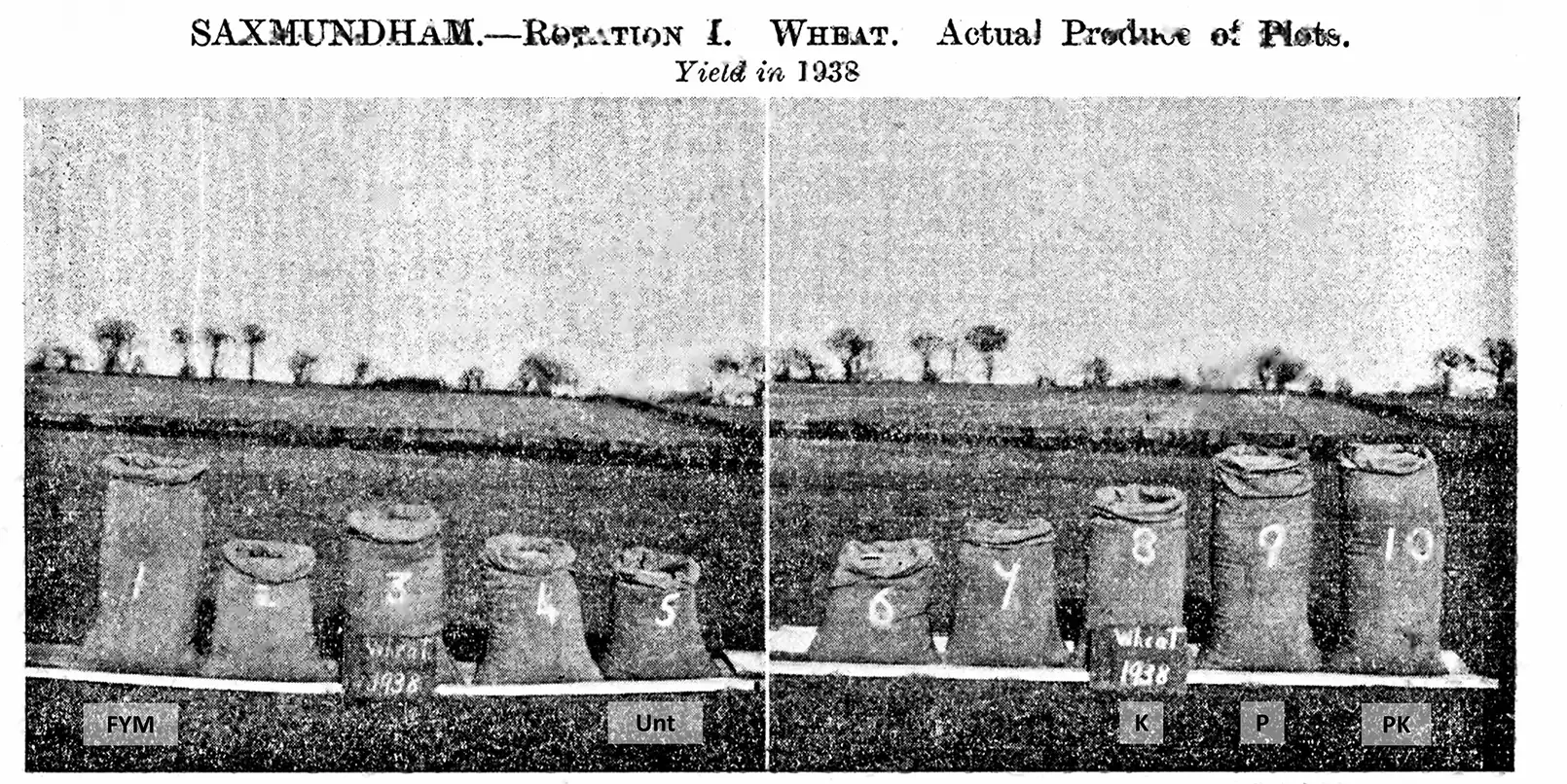
The longest of the long term TMAF-supported trial is the Saxmundham Crop Nutrition site, supervised by David Clarke. He presented the work in 2024 with huge enthusiasm, ever aware what a wonderful resource the site is and reminded his audience “you would have to wait 45 years before you could do an experiment like this anywhere else!”.

For the potential of work at the site to be as relevant to farmers now as it was when it began in 1899 to examine the performance of mineral and natural (FYM) fertiliser, three new treatments have been added to the core initial treatments of FYM, PK, P, K and untreated. From 2020, bonemeal was replaced by Green Waste Compost (GWC). ‘N only’ was replaced with a foliar P product. Also, ‘K only’ treatment is now to be used as a lower P treatment.
The yield response graph for 2020–2022 (3 seasons), reflects updates to the treatments. It shows cumulative yield response compared to the untreated control, with labels indicating the response for each treatment.
In summary, “We see only a 13.9% yield increase from foliar P products, making it the smallest response apart from K alone. In contrast, PK fertiliser provides a 35% yield increase over untreated, while FYM delivers an additional 18% yield increase beyond what is achieved with bagged mineral fertiliser alone.”
David admitted that the site continues to pose puzzles to solve. “Why is organic matter level increasing on every plot since we took the site over? What are the chemical implications for soil from undesirable constituents in GWC?”
Long view of new trends

Next, Nathan Morris reports recent work in the TMAF-supported long term New Farming Systems (NFS) and Sustainability Trial in Arable Rotations (STAR).
He admits his favourite of all is experimentation with differences that combinations of cultivations make. He thanks Morley Farm Manager David Jones for always offering real farm equipment to use rather than trial dimension machinery.
Overall, Nathan reports, there continues to be a generally positive yield response following use of cover crops and shallow tillage. However, yield is not the only benefit. With the use now in STAR and NFS trials of drones, drilled soil samples, soil moisture probes and lysimeter for nitrogen leachates – plus new PhD research on greenhouse gas emissions – there are plenty more soil characteristics to measure and report on.
Raiders of the Lost Trait

Dr Maria Hernandez-Soriano gives a whistle stop summary of her work with the Thriving Roots Underpinning Total Soil Health (TRUTH) project at John Innes Centre. She describes how this is “combining plant science with soil science to discover whether there are productive wheat varieties which are beneficial to soil”.
A regrettable result, she explains, of the last 100 years’ focus on above ground traits in wheat that diversity, and positive varietal traits, has been ignored or, worse still, lost.
Several cultivars with promising tendency to need less nitrogen fertiliser and/or boost beneficials in soil microbiome have been selected from cultivars saved in seed collections.
To test their performance in farmers’ fields next, she called in UK’s British On Farm Innovation Network (BOFIN). BOFIN farmers or Root Rangers grow the wheat on different soil types using organic/regen or conventional techniques then collect the soil around the roots – the rhizosphere – and send for analysis.
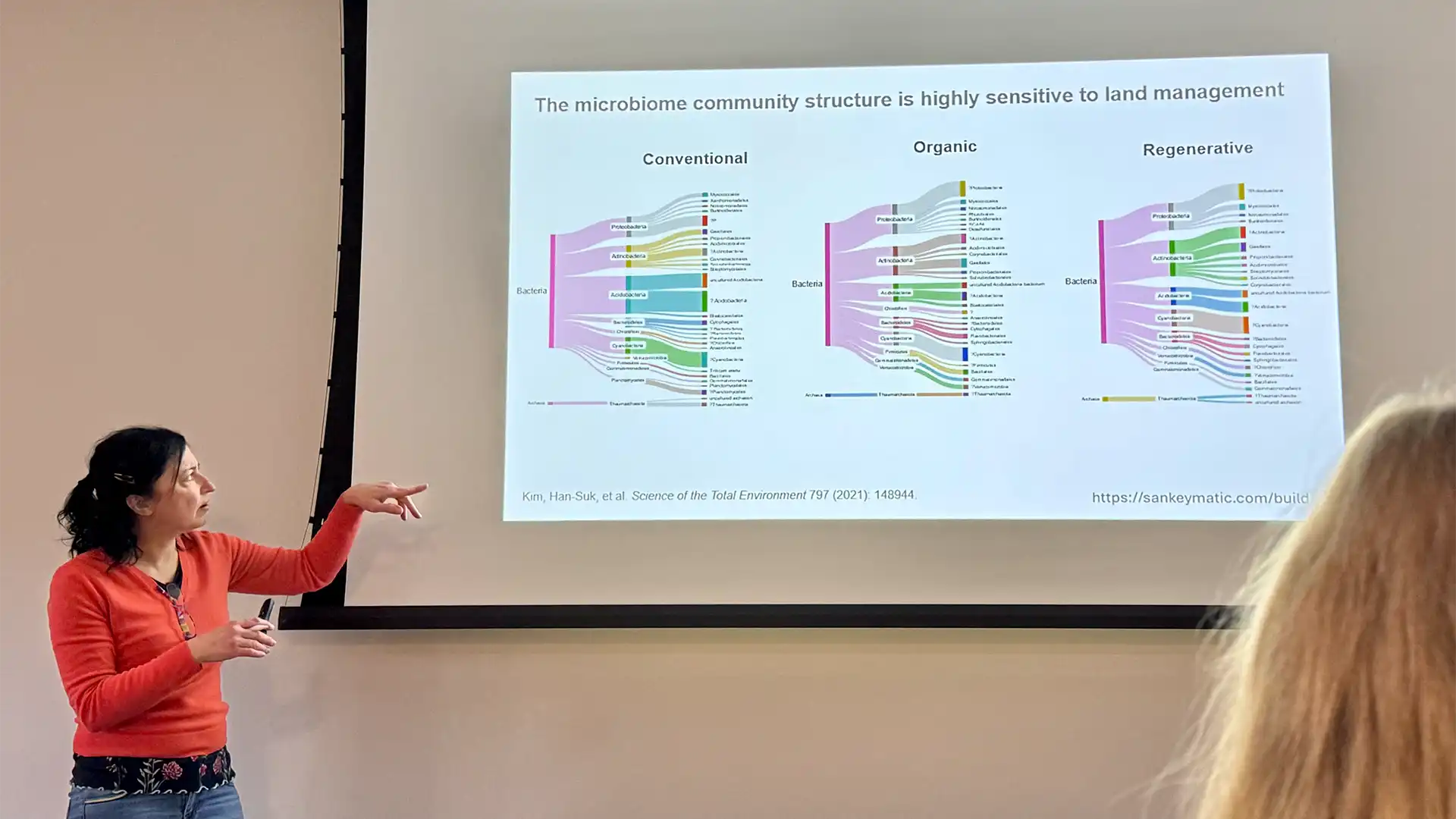
So far, “significant differences have been found, dependent on land management”. Also, “the microbiome community is highly sensitive to land management’”. Evident differences observed between conventional and organic/regenerative, but not so much between the latter two.
For 2025, a new squad of Root Rangers is ready for action, trialling 20 wheat cultivars. One phenomenon under scrutiny is whether there can be better/faster conversion of ammonia to nitrate by soil microorganisms. “It’s the next scale and we’re very excited at this.”
TMAF trials earn international respect
Long term soil trials are particularly precious. There are not many in the world. There are just ten in the UK and TMAF supports three of them.
No surprise then there’s growing international interest in TMAF-supported long running science. For example, Nathan Morris was invited to join soil scientists from 38 countries at the 2024 ISTRO conference in Virginia Beach, USA. He presented observations from ‘The integration of cover crops and soil tillage to improve crop production efficiency in a long running UK field experiment”.
There’s a plan for a group of American soil scientists to visit Morley in 2025.
Much to celebrate at Morley in 2025
The Saxmundham trial work will celebrate its 125th anniversary on 22nd May.
Another milestone to mark is that this year it’s 20 years since we began the STAR Project, the long-term research to deepen understanding of interactions of rotations and cultivations on arable cropping.
One of the final comments from the audience is from Philip Richardson. He stresses how deeply these Winter Talks 2025 confirm it was the right Morley decision to switch to long term research rather than invest in “which?” trials, that simply aimed to guide which new agrochemical to use. He reminds all of us that without TMAF stepping in, when Rothamsted Research pulled out of one of the few long term trials sites in the UK and Europe, so much would have been lost.
Plenty for all to takeaway, and – as many of the farmers listening at the Winter Talks hope – plenty of information and observation to analyse, distil and summarise to give the TMAF practical farming advice needed for decision-making for fields all over East Anglia.