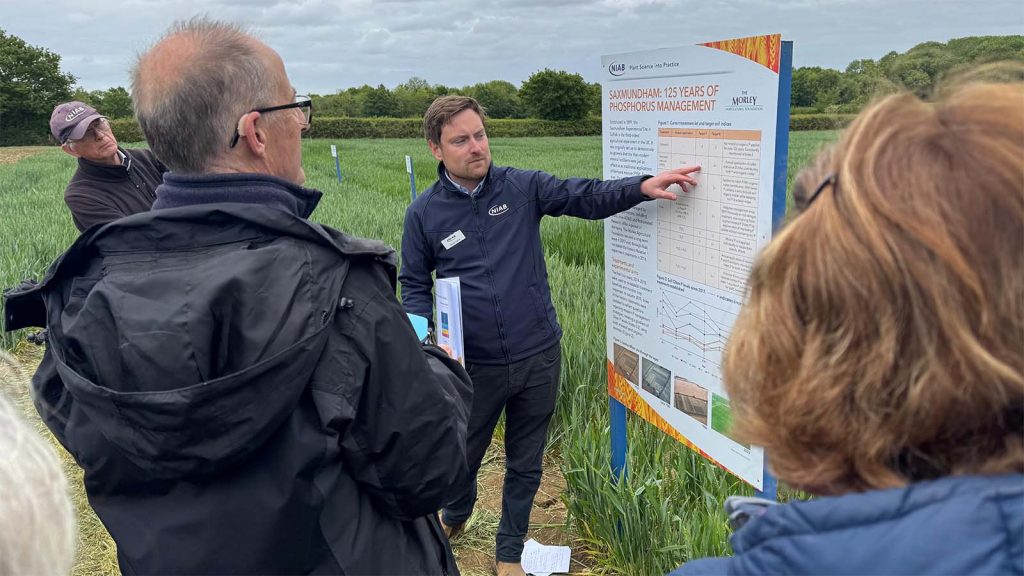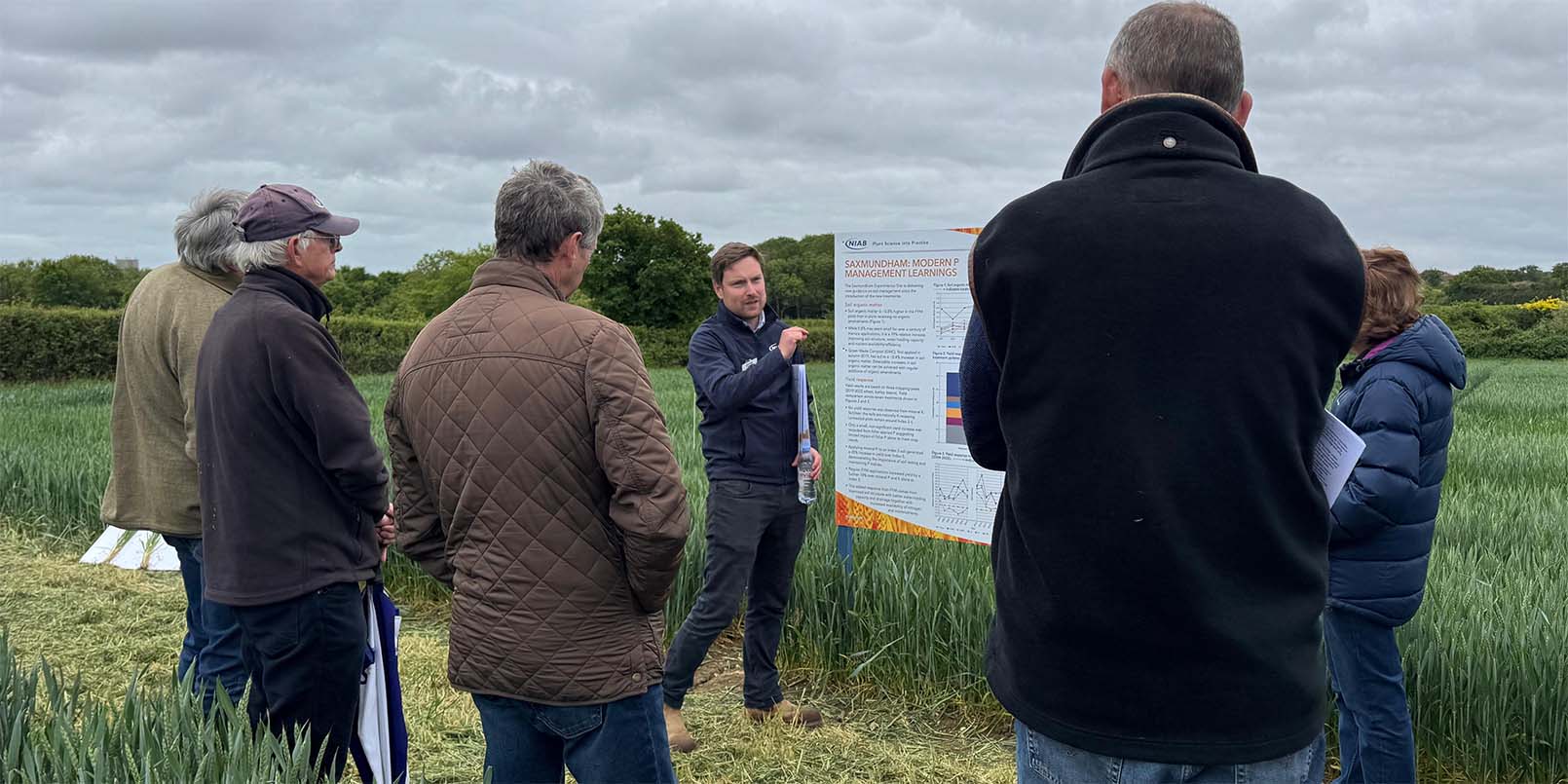
TMAF prioritises investment in research and careers of younger scientists. Dr David Clarke explains what drew him to a career in agricultural science and how farming, farmers and TMAF are helping fulfil his career ambitions.
Growing up in rural Norfolk, but not in a farming family, I think I was always interested in agriculture. Doing GCSE’s and A levels, it was environmental and climate science and physical geography that fascinated me. I spent a lot of time in rivers, on rivers and round rivers and went to Aberystwyth to do a BSc (my Dad encouraged me to do science) in physical geography.
The pull of farming and help of farmers
I had no interest in volcanoes! I chose modules in climate change, coastal erosion and physical processes and some agriculture. When I graduated, I was still into environmental sciences and came back to Norfolk to a Masters degree in climate science at UEA. For that I had to choose a project and again chose agriculture and plans for a straw burning power plant in the middle of Norwich. I wanted to speak with farmers and emailed locally and three – Patrick Mutimer (now TMAF trustee), Tony Bambridge and Kit Papworth – all invited me to come and talk about straw and its value to them. I spent hours with them and their perspectives and enthusiasm sparked something in me.
From that I went for Masters in research at Cranfield University quantifying the impacts of climate change on wheat yield. I realised I didn’t know very much about agriculture in the true sense and next I wanted to do something more practical, a proper job, and come back to Norfolk. I saw the job as a field technician with Niab at Morley and got it. That’s when TMAF started to have a big impact on my career.
TMAF’s influence
Morley Farm Manager David Jones, who’s become a good friend, has taught me loads. Then there’s TMAF’s work and experiments. My job at Morley was to collect and process all the data and that’s where my interest really took hold with how useful the TMAF-supported trials are to farming but how much value I could add to them because the information was being underutilised. In previous role I spent six months trying to get data to work with and here at Morley we’ve got shed loads of data going back to the 1980’s!
I felt I could help utilise crop models that would be beneficial to farmers, save them money, even make money and have a big positive effect for environment and climate change. I went to Elizabeth Stockdale at Niab and she said the best thing was to use it in PhD research – with TMAF support – while still working and that’s been great. I got my PhD in 2025.
Still asking questions
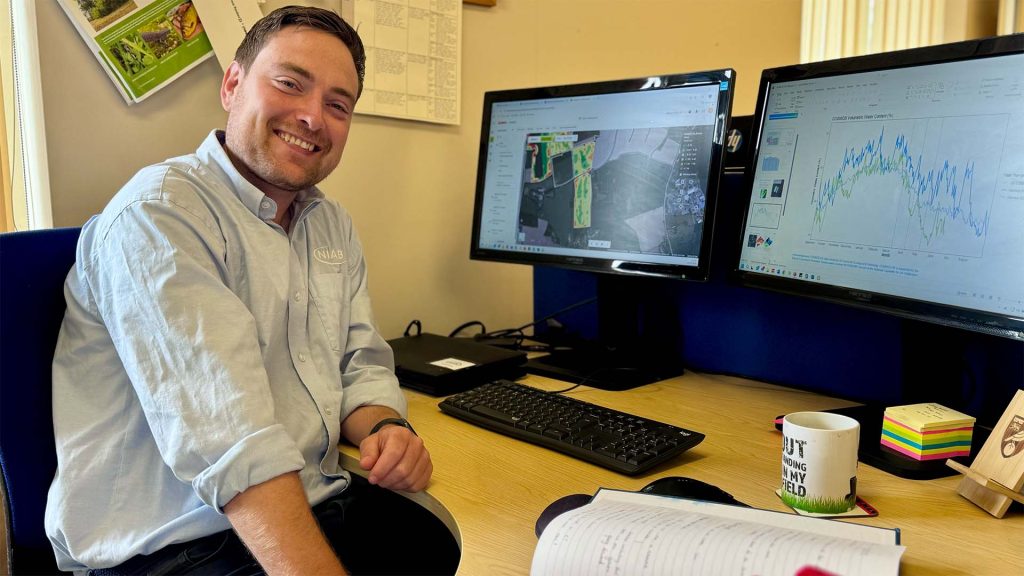
Along with my ongoing research and data analysis I do, like with the long term trials, I’m looking for other questions to find answers to. I have to admit that writing proposals can be tedious, but I have helped to pull together a new research proposal to ADOPT (Accelerating Development of Practices and Technologies) as well as other Inovate UK, Charity and Levy board projects. ADOPT is for farmers, growers, and foresters in England who want to test and trial new ideas or solutions on their farms.
The inspiration came from TMAF-financed research data that showed a red flag for soil physical health after sugar beet. Beet is a very important crop in this region, so we want to trial ways to manage the resilience of soil better.
We’ve got together a team, with David’s and TMAF’s help, to put a proposal to get funding from government to work on the issue with farmers. It just shows how every pound invested from TMAF can leverage, for example, £100k from government.
Reflections and measurements of success
I’m glad I kept my studies broad and then found what I wanted to specialise in. I’m glad I discovered TMAF and it’s long-term approach to trials and through that first job with Niab, found the huge amount of data here at Morley. I’m grateful for the encouragement from Elizabeth Stockdale and Nathan Morris at Niab to use the data in a PhD. I’m glad that my interest came first and the idea of a PhD came second. Not the other way around as I think for a PhD it’s got to be an issue that really interests you. Not that your first interest is just getting a PhD!
I’m really enjoying the trials and data analysis I’m doing. Responsibility of being a co-supervisor for two PhD students next year will also be a new challenge. One is using TMAF data and AI for measuring soil health, the other is on detecting and managing ergot on farm. I know how important that support and guidance was to me and now I am able to pass that on.
In future, I’d like to publish some papers. Now, my main measurement of success is that people are coming to me asking for my help with the science they want to do. Or they are inviting me to explain my science and work to groups and to meetings. I guess that’s a success, that the work I’m doing is relevant and people want to hear about it. The opportunities I’ve had so far have been fantastic and TMAF has been – and continues to be – really important to me.