
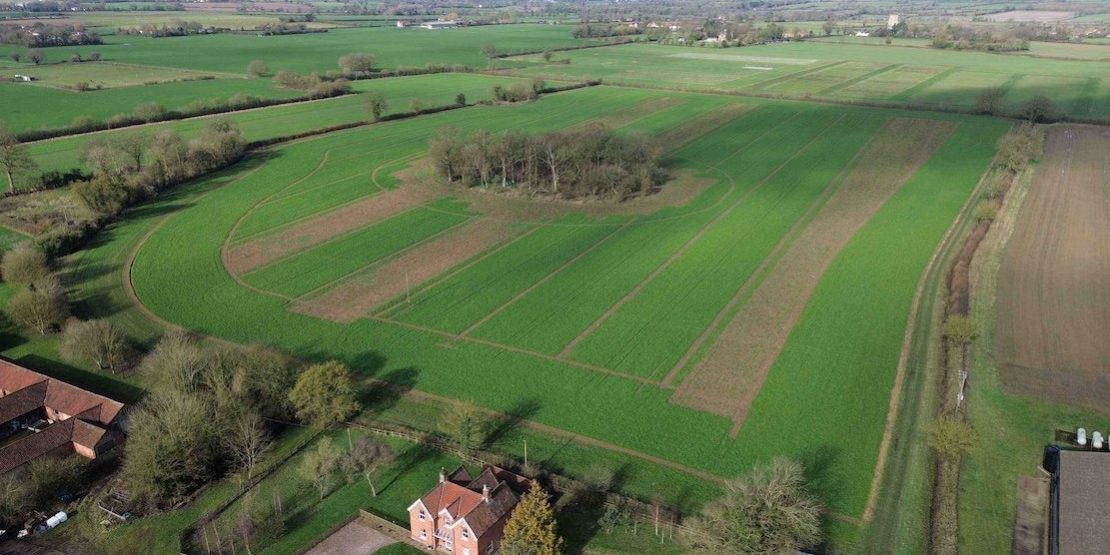
In late 2025, Morley Farms was awarded the ADOPT (Accelerating Development of Practices and Technologies) grant we applied for. It will fund the project ‘Adopting resilient sugar beet at farm scale’. Morley Farms Manager David Jones explains why we went for the grant and what his plans are now.
For many years there’s often been a disconnect between research efforts and the needs of a practical agricultural industry.

Academic organisations commit to doing research of great interest to themselves and funders, but perhaps not necessarily or immediately useful to farmers and farming. Or maybe the research is relevant and usable by farmers, but the findings are not shared in a format or forum that helps get it into action or change on the ground? More work needs to be done to bridge the gap.
Is there now more interest in research more relevant to farmers?
The UK government and others have recognised the problem and are now focusing more on the outcomes of research and the need to demonstrate them. In 2025 Innovate UK, in partnership with DEFRA, offered ADOPT grants of £50-100k. The principal applicant had to be a farming business and that’s where Morley Farms saw a chance of funding for research we wanted to do.
“ADOPT is a collaborative farmer led project that trials new technologies, practices, or solutions to address on farm challenges, improve productivity, and enhance environmental outcomes. The programme aims to accelerate adoption of innovation across the agricultural sector by demonstrating practical benefits to other farmers, growers and foresters”. UK Research and Innovation
What could make sugar beet more resilient?
The Morley farms ADOPT project is led by me with the help of Dr David Clarke. We are looking at using endophyte fescue grass as a cover crop before sugar beet. This endophyte is a fungus that lives on the roots of the grass and makes the plants less palatable to insects. It is used in New Zealand to reduce leather jacket damage in grazed grass.
What we want to test at Morley is whether when the grass is destroyed the alkaloids that are produced can be absorbed by a sugar beet plant making them less palatable to aphids. This theory has been tested on small plots with variable success. Our ADOPT project aims to test this on field scale.
There are 3 treatments: farm standard practice, endophyte grass with strip tillage and endophyte grass with normal non-inversion tillage.
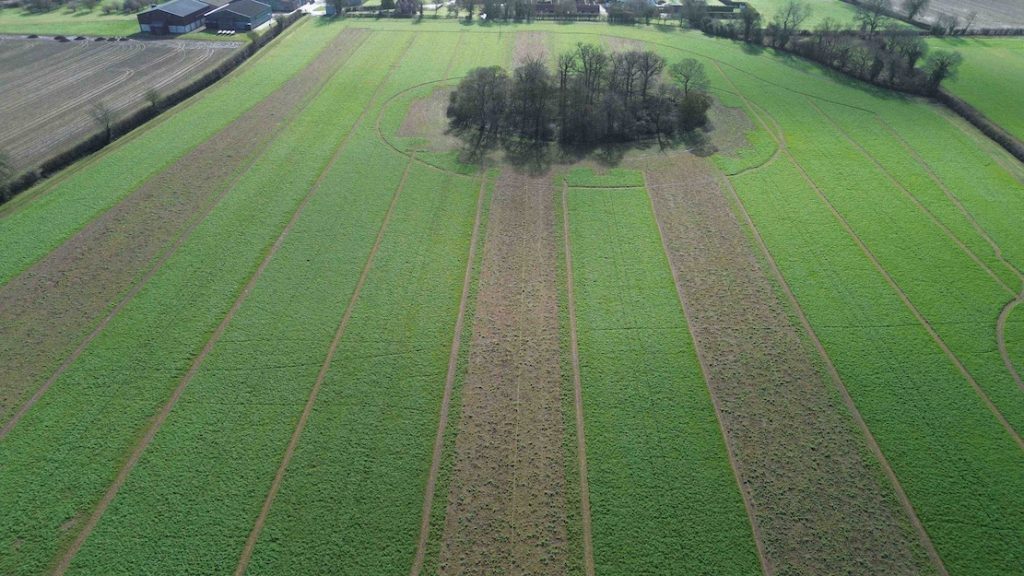
It is quite simple to grow grass, and it is quite simple to grow sugar beet. The challenge is the transition from grass to sugar beet within days. We are also investigating the value of fescue grass as a cover crop. Niab will be measuring the cover crop and the soil. BBRO will measure the aphid presence and sugar beet crop. Currently the grass seed is only available in New Zealand but another farm, Wrights of Brettenham, is going to grow a seed crop for us. A further farm, Robinson Farms Ltd, is evaluating the endophyte grass ability to control nematodes.
Life’s too short not to do a MRes!
In 2023, I was diagnosed with cancer. Following chemotherapy and a long operation I am pleased to say that I have been given the all-clear. I strongly believe my illness, treatment and recovery has made me a better person, although it’s been a tricky way to better yourself!
Life is too short not to find interesting things to do. Over the years I have fixed old cars and boats. Post-cancer, I wanted something different. So I decided to do a master’s degree. I have chosen to do a Master of Research, known as MRes for short.
My research is based on the Morley farms ADOPT resilient sugar beet project. I will be working on the project day-to-day anyway, but I will take this further by doing extra assessments and understanding more about the endophyte grass.
Tapping in to University of Nottingham expertise
I have chosen University of Nottingham to work with on the academic side as they have previous experience with sugar beet and endophyte grass. To complete the course, I will do some taught classes which can be done remotely. Doing an MRes usually takes 1 year to complete but I am going to do it over 2 years. Not just because I have the full-time job of Morley Farms Manager but also it means we can run the experiments over 18 months (instead of just a year) and then have six months to write the findings up in a robust scientific manner as a 35,000-word report.
Although I have only just started I am really enjoying it. I am using a part of my brain that I don’t normally use. I will continue to report on ADOPT research here at Morley Farms as part of my MRes. It was do this or build another boat. And I’ve got enough boats already!