
In the second heatwave of summer 2026, Morley Farms Manager David Jones reflects on what is and can be done on the farm to adapt to climate change.

I remember 25 years ago people talking about climate change and asking, “ how are you going to change your business to adapt?”. Back then, my response was “no change”. There were lots of predictions about how weather would be different but little evidence at a UK regional level.
What’s the picture now?
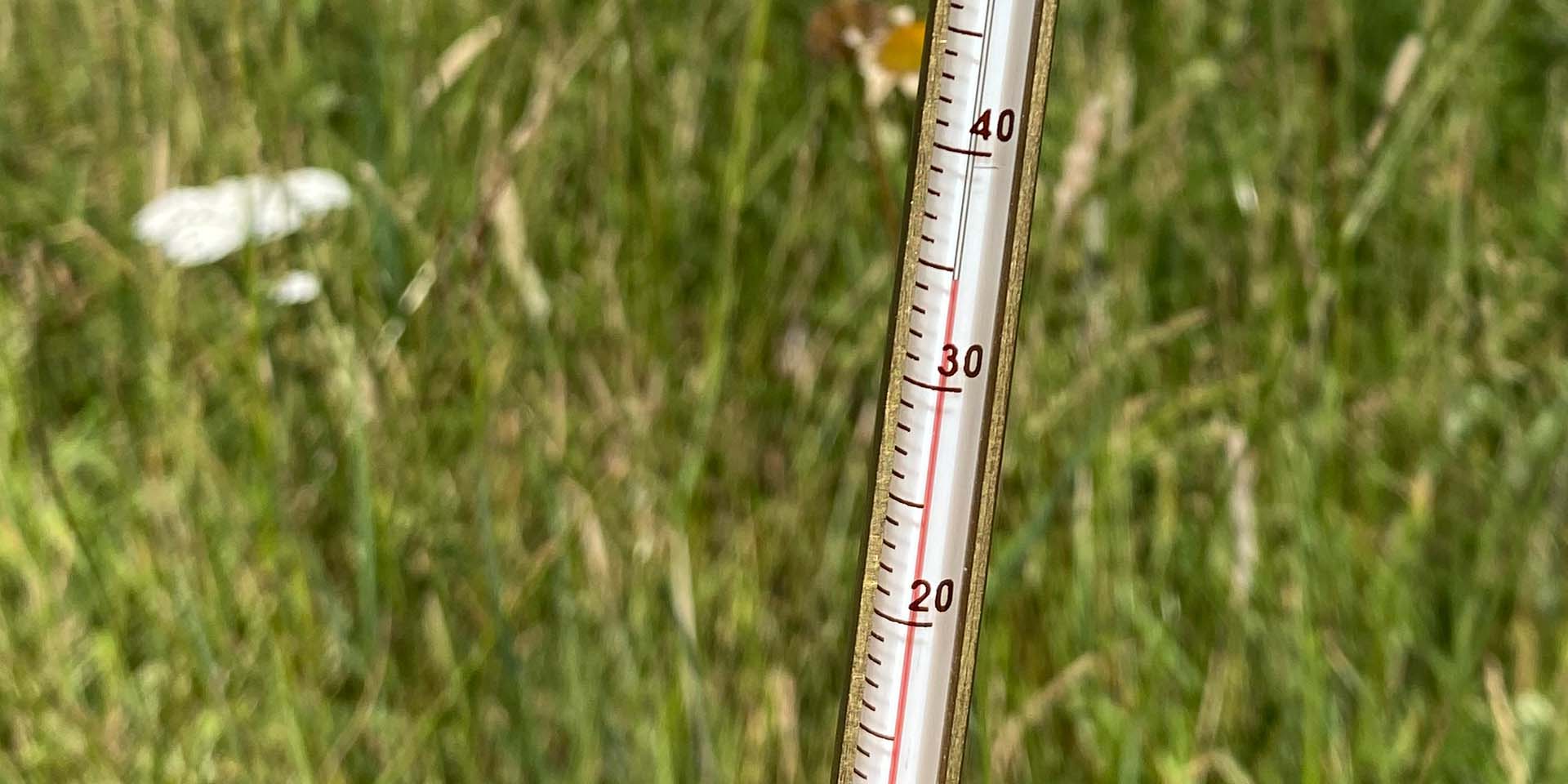
In 2026 it all looks rather different. The agricultural business has changed: modest commodity prices and the cushion of BPS gone. On top of that, April and May only recorded 15mm of rain and a few days recording 35°C at the end of May. As sugar beet crops struggle to germinate and winter wheat dries to a crisp, it makes me ask “have we adapted well enough to our new climate?”.
What questions do I ask about our farming?
Are our regular standard practices still relevant? Are our financial benchmarks still accurate? Is the way we cultivate soil and establish crops right? Are fertiliser rates right if something else is a limiting factor? What about pesticide programmes and market choices?
We tend to get swept along in a system often driven by people selling shiny new things that promise to help. I think it is time to step back and take a deep breath and think.
Should farmers blame the weather?
When crop yields and quality are compromised it is easy to blame the weather. We can’t predict the weather accurately into the future (despite what some organisations might say) but we can learn from how it has changed in the past.
If we consider the last 10 years, compared to the previous three decades measured at Morley we have had 0.5 degree increase in the average temperature. This corresponds with national records. April has become the driest month and October is becoming increasingly the wettest. It’s not to say that this trend will become the norm, but it is looking more likely.
Are we getting ahead or falling behind on adapting to climate change?
A recent report published by climate change committee ‘A well-adapted UK’ (the fourth independent assessment of UK climate risk) considers how the UK is adapting to climate change. It highlights the risks of warmer than average temperatures, increased likelihood of heat waves and wetter periods with increased flood risk. In each section it considers different sectors e.g. education, health care, housing etc and what the implications might be. Land use, agriculture and food supply are well represented in the report.
What does adapting to climate change mean for Morley farms?
The report struck a chord with me as I watch my wheat dry to a crisp. It summarises the bigger picture for the UK and global food supply. It makes recommendations of what can be done to adapt.
I believe it is here and now we need to be well-adapted in East Anglia and I need a well-adapted Morley farm. It’s easy to dismiss a government report and say “so what, they are doing nothing about it why should I?”.
I often hear people say the climate is always changing. Next year it will rain soon after spring crops are planted. Next year will be a better growing season. Not many places in Norfolk can boast that they have a 50 m contour that goes through the farm. Rising sea level is not a problem here. Plus, because of the flat landscape, flooding from rain is also unlikely.
Is some adaptation to climate change happening?
I think many arable farms are adapting. For example, at Morley farms we have changed our approach to cultivations to avoid moisture loss in the spring.
Winter ploughing is avoided as without a winter frost it just creates dry cobbly seed beds. We avoid harvesting at temperatures over 30 degrees as the risk of fire becomes greater.
In our own experience, and that of others, winter cereal crop yields have reduced by 10% and it’s blamed on the weather.
There seem to be numerous initiatives, research projects etc aimed at making crops more drought resistant and so on. However, there seems to be a lack of collaboration of bringing ideas together to demonstrate to farmers like me the sustainable profitable solutions at farm level.
When does the pace of change become a crisis?
But there’s no getting away from climate change. It’s here. Some have even started to use its new name: the climate crisis. The effect on the weather and our lives as well as our farming is fresh in our minds thanks to the second heat wave of 2026 in a few weeks. Apparently interest in reducing the use of fossil fuels has risen with the temperatures!
Mitigating the effects of climate change that are here now is obvious and essential. And particularly doing the simple and lower cost things like planting and maintaining trees for more shade in public places like showgrounds and schools. Instead of installing air conditioning, to use curtains and shutters in our homes to help when heatwaves hit.
Climate change is affecting us all and so it is everyone’s and all sectors’ responsibility to discover and take up the best actions to mitigate it and help prevent the acceleration. There are immediate things we can do as well as plan for the medium term.
As farmers, we are no exception. We need to change too. We need to cut our cloth, or as it’s also known, ‘adapt accordingly’ if we are to be a profitable arable sector.